Anatomic vs Reverse Total Shoulder Replacement
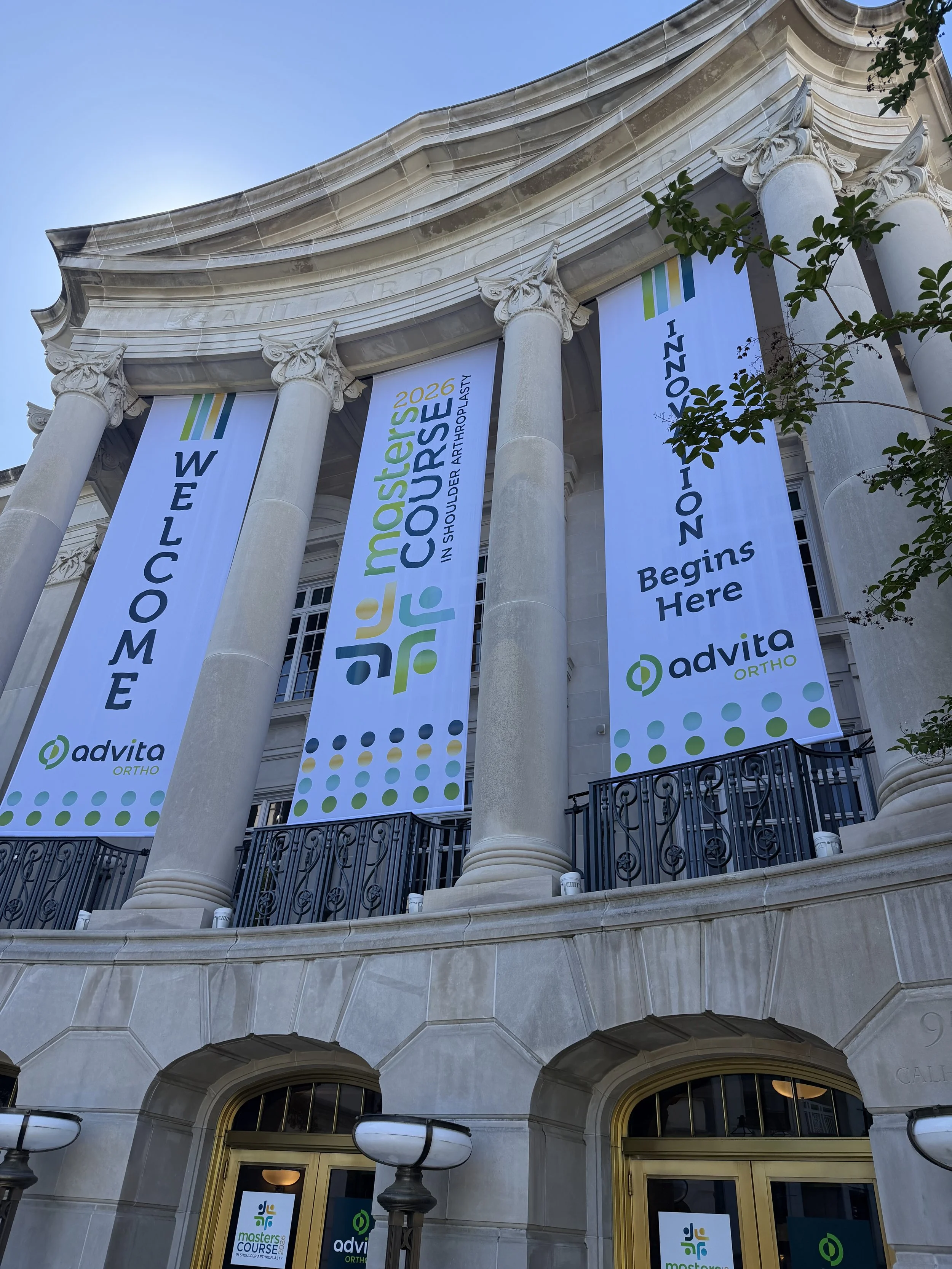
Masters Course 2026
Charleston, S.C.
Attending the Masters Course 2026 on shoulder arthroplasty marked my third time participating in this outstanding program. Each visit has consistently delivered fresh insights that refine my surgical technique and help improve patient outcomes.
From innovative approaches to complex revisions to subtle pearls on implant positioning and soft tissue management, the course continues to sharpen my skills. Most valuable is the opportunity to exchange ideas with leading shoulder surgeons from around the world, gaining new perspectives that challenge and expand my own thinking.
The most interesting discussion was that revolving around a ten year follow up comparing anatomic total shoulder arthroplasty (aTSA) to reverse total shoulder arthroplasty. The results presented showed that both aTSA and rTSA patients had significant improvements in all scoring metrics, motion, function and significant decreases in pain.
Patient satisfaction scores were
aTSA: 85.5%
rTSA: 93.2%
However, the aTSA patients had an overall 16% complication rate (most common: glenoid loosening and rotator cuff tears) versus rTSA 8% complication rate (most common: fracture around the implant after falling).
The revision rate (% of patients that required another surgery) was:
aTSA: 9.2%
rTSA: 1.9%
The aTSA patients had a significantly higher complication rate and higher revision rate.
This is the largest analysis of long-term clinical outcomes of aTSA and rTSA that demonstrated high levels of patient satisfaction scores, but noted significantly lower complication and revision rates for rTSA patients.